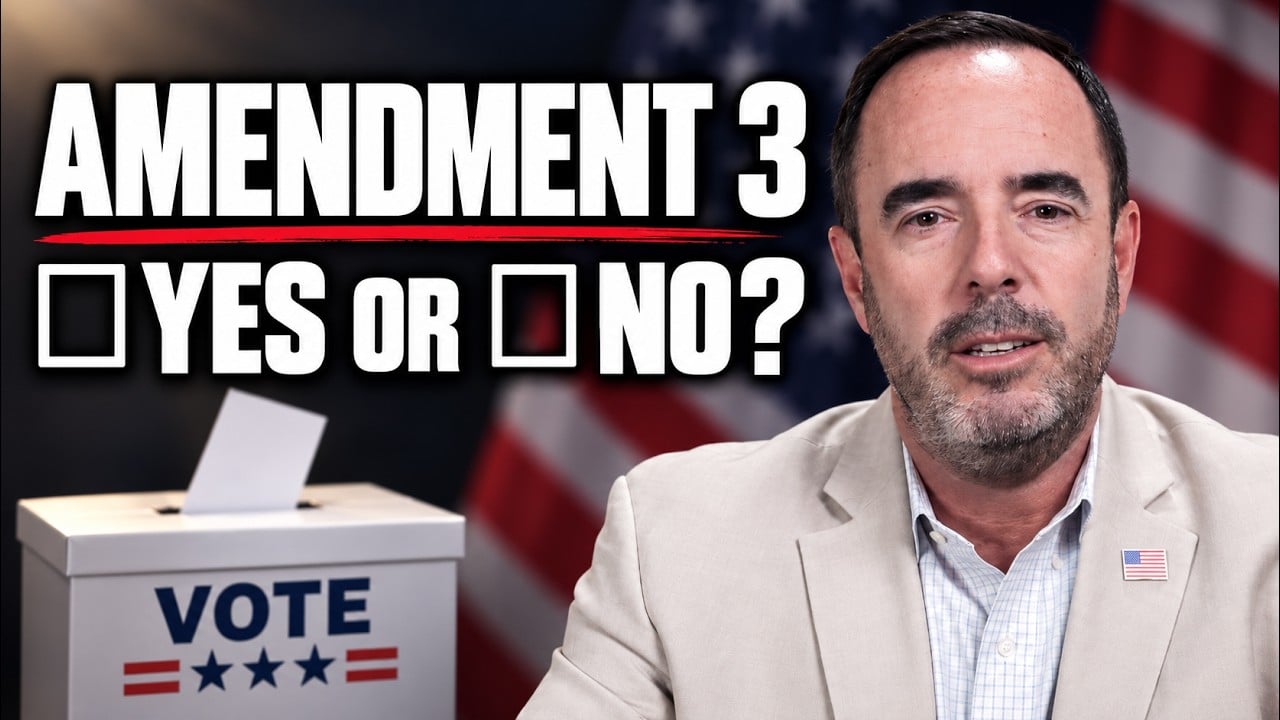
Florida voters will decide on Amendment 3 in November 2026, a proposed constitutional amendment that could significantly change how property taxes are calculated for homeowners, investors and other property owners across the state. The proposal has generated considerable discussion because it could provide meaningful property-tax relief while also reducing revenue collected by local governments.
What Would Amendment 3 Change?
If approved, Amendment 3 would increase Florida's homestead exemption for non-school property taxes to $150,000 in 2027 and $250,000 in 2028, with future adjustments for inflation. School district taxes would not receive the expanded exemption. The amendment would also reduce the annual assessment increase allowed on many non-homestead properties from 10% to 5%. That includes properties such as second homes, rental properties and commercial real estate. Florida's existing Save Our Homes protection for homesteaded properties would remain in place. That provision generally limits annual increases in assessed value to 3% or inflation, whichever is lower.
Why Do Supporters Favor It?
Supporters argue that Florida property owners have experienced substantial increases in housing costs and that homeowners should be allowed to keep more of their money. For qualifying homeowners, a larger homestead exemption could reduce the portion of their home's assessed value subject to county, city and certain other local property taxes. Owners of investment properties, second homes and commercial real estate could also benefit from the lower 5% annual assessment cap, which could provide greater predictability as property values increase.
Why Are Others Concerned?
The primary concern is the effect on local government revenue. Property taxes help fund services including law enforcement, fire and emergency services, infrastructure and other local government operations. Florida's Revenue Estimating Conference projects that Amendment 3 could reduce local property-tax collections statewide by approximately $45.8 billion over its first five years compared with current law. That does not necessarily mean services would be reduced by that amount, but counties and cities could have to adjust spending, budgets or other revenue sources. That creates the central debate surrounding Amendment 3: how much property-tax relief should property owners receive, and how should communities account for the resulting reduction in local tax revenue?
What Does This Mean for Central Florida Real Estate?
For buyers and homeowners in Orlando, Windermere, Winter Park, Lake Nona, Lake Mary and throughout Central Florida, Amendment 3 could directly affect the long-term cost of owning property. It is also another reason buyers should never assume that the property-tax bill paid by the current owner will be the same bill they receive after purchasing the home. Whether Amendment 3 passes or fails, understanding assessed value, homestead exemptions, Save Our Homes protections and property taxes remains an important part of evaluating the true cost of Florida real estate.